

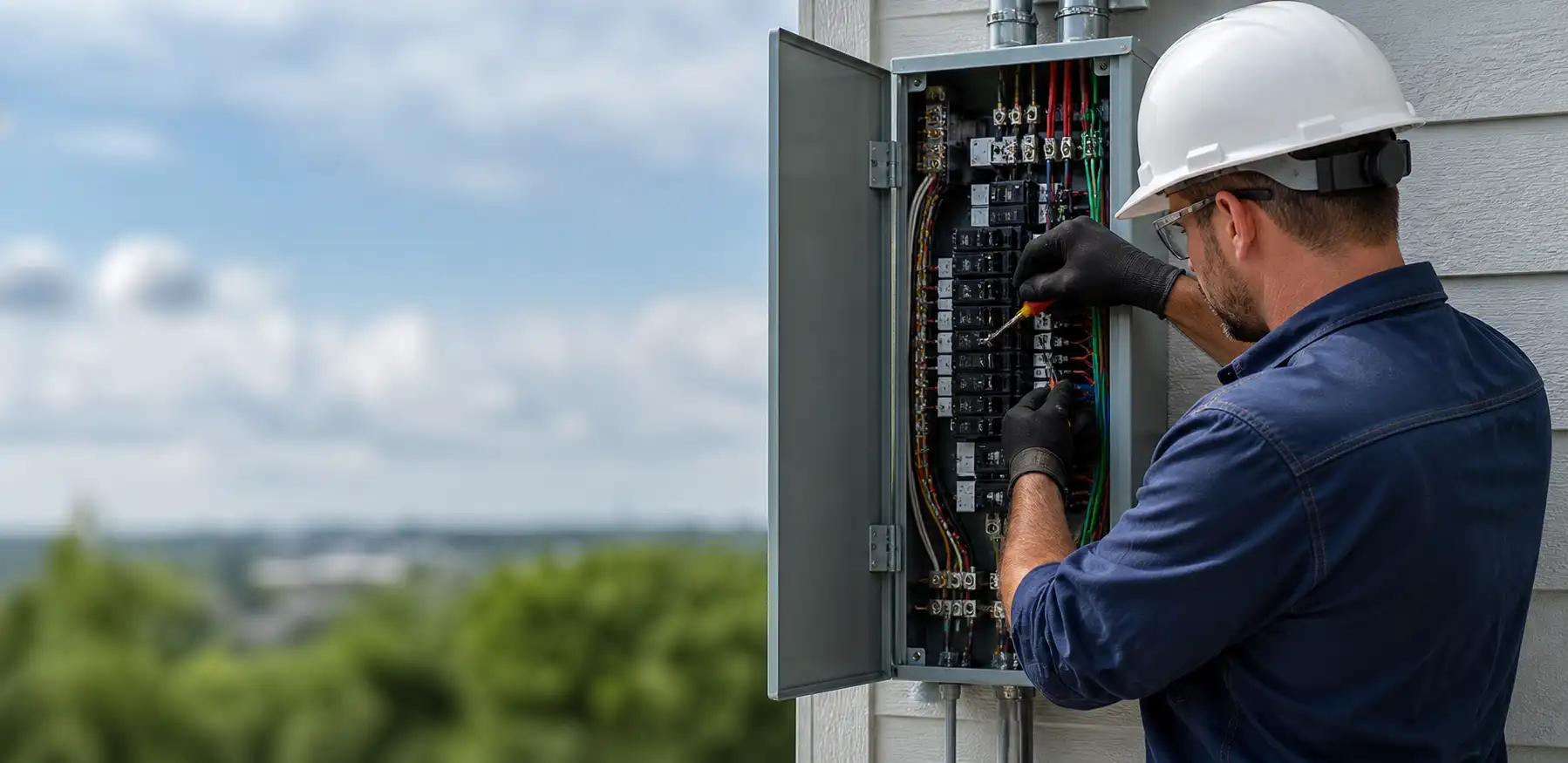
Signs You Need an Electrical Panel Upgrade
Your electrical panel is the box, usually in a garage, utility room or basement, where power from the utility is split into the circuits that run your house. It does its job quietly for decades, which is exactly why most people only think about it when something goes wrong or when a project runs into it.
A panel does not have an expiration date stamped on it, so age alone is not a diagnosis. What matters is whether it is in good condition, whether it is the right size for the way you live now, and whether it was made by a manufacturer with a known track record. The signs below are the ones worth taking seriously.
Symptoms you can see and hear
Some warning signs show up in daily life long before anything fails outright. None of these automatically means a new panel is needed, but each one is a reason to have a licensed electrician take a look.
- Breakers that trip repeatedly, especially when you run ordinary combinations like a microwave and a toaster together
- Lights that dim or flicker when a large appliance starts
- A buzzing, crackling or sizzling sound from the panel
- A burning or hot-plastic smell near the panel or a warm panel door
- Scorch marks, rust, or moisture inside or around the box
- Breakers that feel loose, will not stay reset, or look melted or discolored
- Outlets or switch plates that feel warm to the touch
When the panel itself is the concern
Some panels are worth a closer look simply because of what they are. Homes that still run on screw-in fuses rather than breakers are working with older equipment that often offers less capacity and fewer modern protections. Panels made by Federal Pacific Electric (Stab-Lok breakers) and Zinsco are the two names electricians and home inspectors flag most often.
For Federal Pacific, the U.S. Consumer Product Safety Commission closed its investigation in 1983 without determining that the breakers were unsafe, and said it was concerned that some did not meet calibration requirements. Its advice was not to simply reset a breaker that keeps tripping and to consult a licensed electrician when in doubt. That is a fair summary of where things stand: not a recall, but a panel most electricians prefer to inspect carefully and often recommend replacing. Zinsco panels are discussed in a similar way across the trade, usually over breakers that can make a poor connection to the bus inside the panel.
When your loads have outgrown the panel
Many panels are perfectly healthy but simply full. Houses built decades ago were designed for far fewer electronics, a smaller kitchen and no electric vehicles. A panel with every slot taken, or one that has been stretched with tandem breakers (two circuits squeezed into one slot), can leave you with no clean way to add a circuit.
The common triggers are projects, not failures:
- Adding an EV charger, which typically needs its own dedicated 240-volt circuit
- Installing a whole-house generator and transfer switch
- A kitchen remodel, an addition, or a finished basement or garage
- Switching from gas to electric appliances, or adding an electric range, dryer or heat pump
- A service that is rated lower than what your household now draws at peak
Two-prong outlets and other clues around the house
The panel is not always the first place the problem shows. Ungrounded two-prong outlets, a scattering of extension cords and power strips used as permanent wiring, and a lack of GFCI protection in kitchens and bathrooms all suggest a system built to an older standard. They do not prove the panel needs replacing, but they often come up in the same conversation, because a panel upgrade is a natural time to bring the rest of the picture up to date.
What a panel upgrade actually involves
At a high level, a panel upgrade means replacing the main panel, and sometimes the service equipment feeding it, with a unit sized for your present and planned loads. The electrician evaluates your existing service, plans the new layout and pulls any required permit. Because the power to the house has to be shut off while the work is done, the job is coordinated with your electric utility, which in most of the Birmingham area is Alabama Power, though some areas are served by co-ops or municipal systems.
Expect the power to be off for part of the day while the old panel is removed and the new one is wired and labeled. An inspection is typically part of the process, though requirements differ between cities and counties. This is not a do-it-yourself job under any circumstances: the service conductors coming into the panel stay live even when the main breaker is off.
How to decide
Separate urgent from planned. Burning smells, scorch marks, a hot panel, water in the box or a breaker that will not reset are reasons to stop using that circuit and call right away. Everything else, such as a crowded panel, an older brand or a big project on the horizon, is something to plan around. Have an electrician look at the panel in person and put the scope in writing.
If you smell burning, see scorching or moisture at the panel, or hear buzzing or sizzling from it, do not open the cover or keep resetting breakers. Turn off what you safely can and call a licensed electrician.